What’s New

Listen….your para-spinals have something to say!


For years, when teaching communication workshops using improvisation exercises, I have used the phrase, “Listen, with your whole body”.  I always felt that was clear and I certainly felt that I knew what I meant. But a few weeks ago I came to understand this in a completely different way and from a most unexpected source: my chiropractor. I know that sounds crazy but here’s what happened.

As usual I lay down on the table face up and he started “listening” to my body. As he pressed against my leg or arm and asked me to resist he would say: “uh huh” or “hmm…” or “now that’s interesting”. I was fascinated both as a patient and as a someone very interested in real communication.

Me: It sounds like my body is talking to you

Doc: It certainly is.

Me: What is it saying?

Doc: Well, your para-spinal muscles can hear things that we cannot.

And BINGO, a lightbulb went on above my head.  Every cell in our body communicates with each other and with us if we know how to listen to it.  The Mirror Exercise, where two people try to simulate a mirror’s reflection popped into my head and its value and importance was driven home in a way that I never could express before. And the significance of this idea as a way of enhancing communication between people, especially when that communication is vital became so clear to me. Listen! Don’t just hear. And do it with every part of your body — your instrument for greater communication.

Media Interview Got You Nervous?

Do the words “media interview” send you  running for cover?  Have you ever been interviewed by a reporter and afterward said “Never again”? Do you wish you understood more about the skills necessary to perform well during an interview? During my 35-year career in broadcast news media, I’ve seen it all – from the perfect to the disastrous and everything in between. Media training can  make all the difference. We offer help for individuals or groups that will make you media ready. So, check out our Exact workshop page, and in the meantime, here are five tips that can get you started.

Five Ways to Prepare for a Media Interview

  1. Understand the media landscape

Familiarize yourself with the media outlet and the reporter who will be conducting the interview. Research their expertise,  previous work, their style of reporting. This knowledge will help you tailor your messaging and anticipate questions.

  1. Craft your key messages

Determine the 1-3 key points you want to convey during the interview. Keep your messages clear, concise, and aligned with your overall goal. Focus on delivering these messages consistently throughout the interview, regardless of the questions asked.

  1. Prepare for potential questions

Anticipate questions and prepare thoughtful responses. Consider both positive and negative  aspects of your topic and develop appropriate answers. Practice your responses to be sure they are concise, accurate, and align with your key messages.

  1. Practice delivery, active listening, and nonverbal communication

Practice with a media trainer or colleague, record the interview, and review for content accuracy and delivery effectiveness. Listen carefully to the questions, maintain eye contact, use appropriate  facial expressions and gestures, and project confidence. Be aware of your tone of voice and body language to appear engaged and approachable.

  1. Set the scene

Keep your appearance professional and appropriate, paying attention to your hair, clothing, and accessories. If using Zoom, create a pleasant setting with good lighting and no distractions.

So, when you get that request to be interviewed, don’t go running for cover. Instead, call us and we’ll get you ready in 5…4…3…2…

Marcy McGinnis is a former Emmy-award winning CBS News producer and executive.


Eat Your Wheaties


What Billie Jean King says is true for all of us, we all must keep at it to get it right. I’m lazy so I wish this were different. I wish I could just fall into something and that would be that, success would be all mine, but that just doesn’t happen. Well, occasionally it does happen, but even then, there are challenges after the initial success.

I think of Anthony Volpe, the shortstop for the New York Yankees. He played baseball for his high school team, Delbarton in Morristown N.J. He was New Jersey High School Player of the year in 2019 and was to play baseball for Vanderbilt University, but instead, he was selected in the first round of the MLB draft by the New York Yankees. A dream come true for Volpe who was a Yankee fan all his life.

And then reality sets in and Volpe’s batting average slips.  Rumors start flying that he may be demoted to the minor leagues. This could be crushing for any rookie, but Volpe keeps playing until he gets it right.

Now I can’t look into the future, but I do know this about Volpe he has a great work ethic, and a positive attitude that will help him as he grows into the game. Is he a champion? Time will tell. But if I were a betting person, I’d put my money on Volpe.

Am I a champion? That’s way too much pressure for me, unless I change my definition of the word. Perhaps being a champion is living a full and meaningful life where you keep playing and maybe just maybe you get it right. A wise person once told me, “Life is but a day’s work, do it well”.  In that sense maybe we can all be champions.

Nothing So Scary As Losing the Room

I walk into a room of graduate students ready to teach a workshop on science communication.  I facilitate these workshops all the time so I’m at ease and comfortable with the program and agenda. What I wasn’t prepared for was the hostility in the room. I had barely opened my mouth, so I figured it was not me that made this group of students so angry. I had to sort this out or the day would be over before it had even begun.

I stopped my introduction and began to ask questions. Turns out these graduate students thought they were in this workshop because they were deficient in science communication, and they were frustrated and insulted. When I said that I was told that they were high potential students and that they were in this program as an advanced course to help them further their careers, that turned the day around. Suddenly they were grateful instead of hateful.

When we talk about knowing our audience, we are talking about more than what is on the surface. These were graduate students in science. They were all about the same age. They all were studying at this university. They all were smart. I had even been told what disciplines were being studied by these students. So, one would think that I knew this audience. But if I had ignored what was happening in the room, all my prep work would have been in vain. No matter what I had planned I had to deal with what was happening in the moment. This meant setting my agenda aside and entering the unknown.

And that can be scary, but not as scary as losing the room.

So if this should ever happen to you:

Take a breath and take the temperature of the room.

If you sense something is off, ask questions and listen, listen, listen.

You may not be able to solve the issue but by listening you will get to really know your audience and then anything can happen.

Go Fish


The American Fisheries Society’s Climate Ambassadors have a tough job. Every day this dedicated group of scientists works to communicate the urgency of maintaining our delicate watery ecosystems and the lives that depend on them. They talk to everyone from fishing communities, to ranch owners, to urban developers, to government officials. And there are times when these conversations are challenging, especially because climate change is rapidly affecting the future of our planet. Talking about climate change impacts is often not easy.

Exact was grateful to work again with the AFS Climate Ambassadors in our Let’s Talk: Navigating Challenging Conversations workshop. We shared tools and skills they can use to better connect with their varied audiences and it was wonderful to see the Ambassadors practice with each other and bond over the fun and challenges of the exercises. With approaches to de-escalate conflict in conversations and find shared values despite ideological differences, these Ambassadors can reach more people who share their love of our valuable waters and can work towards building a climate resilient future together.


Time to Come Out of the Shadows

I’m squeamish about connecting these days, so many topics are hot buttons for people. I find myself backing away and making meaningless small talk. Turns out, I’m even more squeamish about that.

I long for connection and I’m not talking about connecting with friends, that’s easy, that’s why they’re my friends. We trust and care for each other and we cut each other some slack.

But what about all those other people? Yeah, those guys, the people that I do not have an easy connection with. How do I connect with them?  And why bother?

We humans are relational beings, and we need connection to be whole and to thrive. As unique and different as we are, we are also the same. Spiritual teachers tell us that we are one. Genetics tells us we are far more alike than we are different. Psychologists say that connection is the way to stability and growth. And personally, connection just feels right. It feels spacious, open, and really good.  When I don’t connect it can feel tight and small. I feel alone and sometimes anxious.

So, with all this going for it, why don’t we connect more often? My guess is that connection takes time. It slows us down and who has time for that? I have a “to do list” each day and I must get everything done on that list. When I’m rushing around it becomes easy to close shop, to not speak from the heart, and to throw trust out the window… and then close the window

The truth is connection only takes a moment. It happens when we pause and take a breath.  Mindfulness tells us that in that moment we are more present, our mind naturally slows down, our breathing regulates, and we can see who we are talking to…and that can be enough. We may even in that moment choose to smile, and that is a connection. Pause. Breathe. Smile. Try it. It only takes a moment – one gorgeous, beautiful present moment.

Oh that judge-in-my-head

It happens every single time without exception. Every time I work with a new group, I come out of the workshop knowing something more than I did when I went in. If I’m really present, if I’m really listening, the participants teach me.

So it was at NYU Tandon, with a group of PhD candidates in a variety of STEM fields including mechanical, chemical, and bio engineering.  All extremely smart (you’d have guessed that) and all wanting that magical key that leads to better, more specific communication. Carolyn and I were invited to teach two sessions for Matteo Rini’s class, a semester-long course in Science Communication with a strong focus on written communication. Matteo wanted Exact workshops to give them some pointers for verbal communication and presentation.

Early on, we decided to introduce an exercise called “Sixty Second Rambles”. Very simply, we ask each student to come up, randomly chosen to just talk. About anything. For a minute. We suggest that they don’t plan what they’re going to talk about but just let their mouths open and sound come out. As soon as we started, the “judge-in-my-head” started to yell at me. “There are 25 students in this class, and we only have 2 ½ hours. We’re going to spend a fifth of the workshop on this?”  I thought, I’ve made a tactical error but I’m in it now. I hope I haven’t wasted time here.

They all talked. Many of them surprised themselves. Some thought the minute seemed like an hour and some thought it was too short, but all of them spoke about things they cared about. Most of them spoke with a clarity and passion that was engaging or funny or moving. And here’s the surprise for me. This exercise made the group into a group. These 25 different people became a unified team that was ready to learn together – to help each other navigate a variety of more complex communication exercises. Their professor sent an email after the workshop:

“The workshop by Exact Communication was fun and energizing and taught the students the most important skill needed to be a good communicator: empathy for your audience. Every student in STEM should take a workshop like this one!” – Matteo Rini, NYU

My own take-away.  Never listen to the judge in my head. Trust the work and listen to your audience.

Enough About Me…

In kindergarten children are often evaluated on how well they work with others. As adults it’s important to our growth to be willing to play and collaborate, to be friendly and generous, to be willing to share. Today this is called prosocial behavior, which is behavior that benefits others. We learn these behaviors like listening, helping, sharing, comforting, and cooperating mostly through observing them in others and then experiencing them for ourselves.

At Exact Communication we understand how prosocial behavior is key to connecting, and we use improvisation to teach this principle. There are two basic rules to improvisation: “Yes, and” and “Make your partner look good.”  Most of us are at least somewhat familiar with “Yes, and” which is a positive way of saying yes to each moment and then actively adding to it. The second rule, “Make your partner look good” however, does not get nearly the attention and yet, it has prosocial behavior written all over it. 

And here is how it does it: To make your partner look good you must take the focus off yourself and focus outward toward your partner. This does a few things. For you, it helps you to relax and get out of your own head. For the person you’re communicating with, it makes them feel heard, valued, understood, and part of the conversation. But it’s not easy and takes practice. It’s counter intuitive because we are so used to focusing on ourselves instead of who we are interacting with. And it works. 

Try it yourself! Spend an hour, just one hour, where you focus on others, listening to what they are saying, what they need, what they are trying to accomplish, and then respond. Our guess is you’ll connect better, you’ll feel better, and you’ll look a lot smarter. Go for it. Make your partner look good.

Here’s To a Year of Awe and Wonder

In the science communication world we talk a lot about how important it is to remember the wonder, fascination, and awe of what exists in this world. We talk about how important that state of being wowed is to help connect with others over subjects that are hard to grasp. That it overrides our fears of not understanding and becomes a wonderful shared experience.

And there’s even more goodness in small or large awe-some moments: in this New York Times article by Hope Reese, that same awe and wonder have physiological and psychological benefits!

https://www.nytimes.com/2023/01/03/well/live/awe-wonder-dacher-keltner.html

I hope you enjoy this read as much as we did.* And if you want to dive deeper, check out the whole story in Dr. Dacher Keltner‘s book “Awe: the new science of everyday wonder and how it can transform your life.”

From all of us at Exact to all of you, here’s to an awe-some and transformative 2023!

*For those of you who do not have access to the New York Times, here’s a photo of the article.
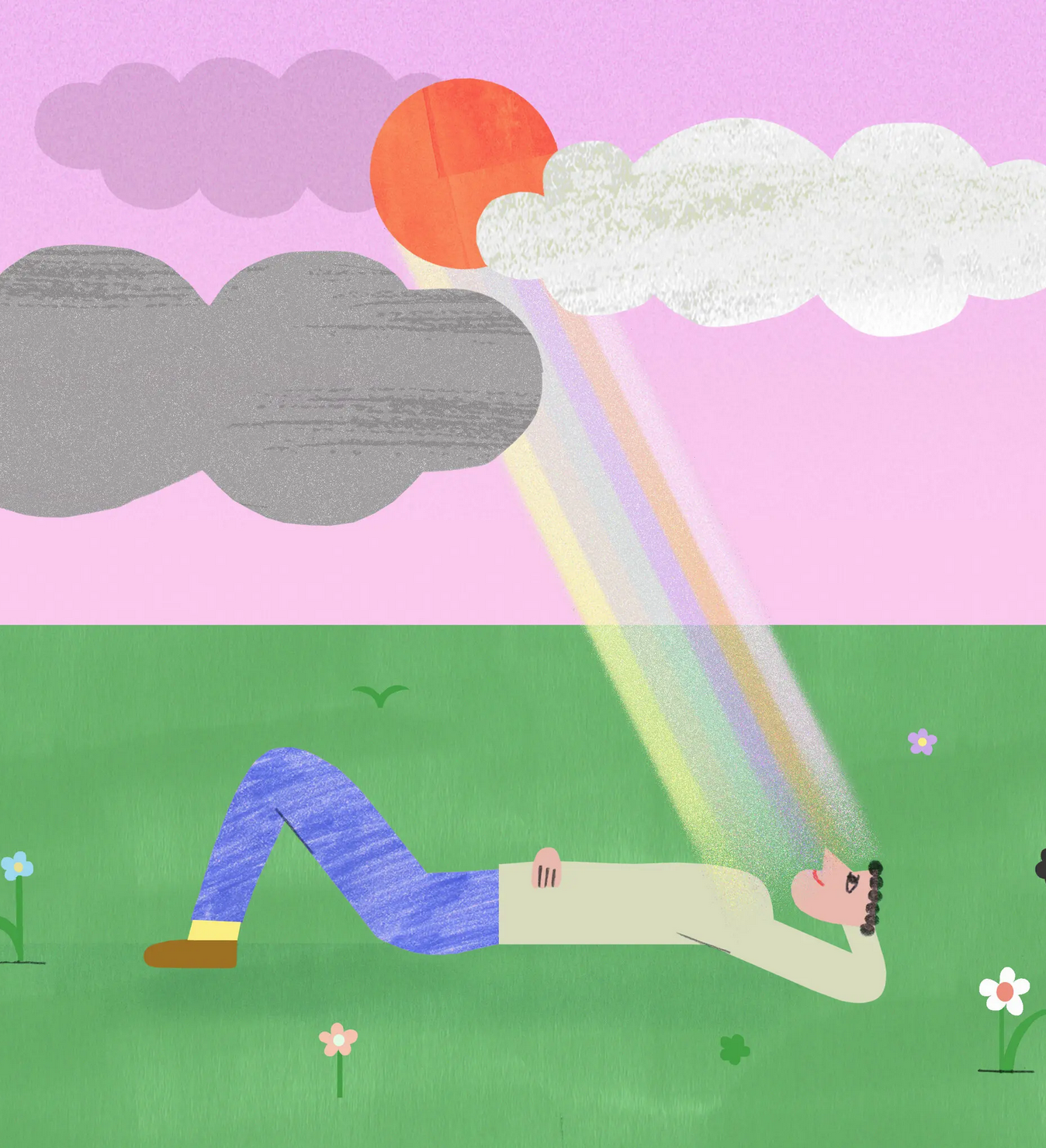
Illustration: Irene Servillo

So What I Hear You Saying Is….

‘I promised myself I would listen better after my failure last time and I’m proud of myself. I was able to listen tonight even though I disagree.’ Civilian participant, To Protect Serve and Understand

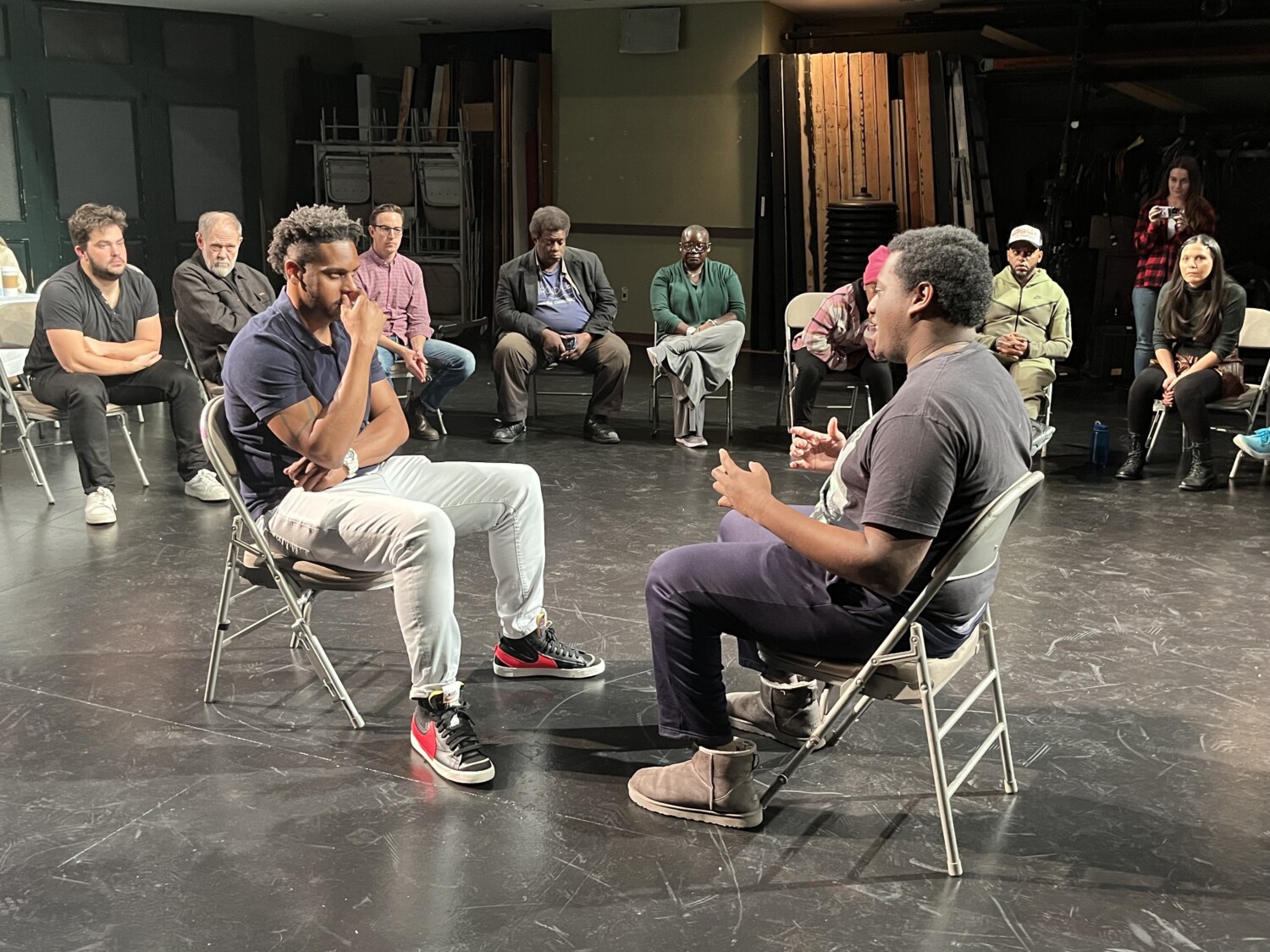
At the Irondale performance space in Brooklyn something unique and a little bit wonderful is going on. People are listening to each other. People are struggling and working very hard to be understood. Only a few weeks ago these same people entered the theater with fear and to some extent loathing the “other”. Watching the struggle itself is the little-bit-wonderful part. The unique part is that the participants working so hard are New York City cops and residents of various communities from Harlem to Brooklyn. And they are doing this hard work with the greatest sense of joy. This is serious play.

In 2015 the world watched a Staten Island man get strangled to death by police officers as he gasped “I can’t breathe”.   Tension between police and community members stood in the way of public safety and trust and at the core was fear. Communication, real communication had broken down. When we offered our help as communication experts and theatre artists to NYPD Commissioner Bratton, he took us up on it. And so, since 2015, for 10 weeks at a time,  police officers and civilians bravely learn to improvise, not for comedy but to better find the common ground beneath the uniforms, skin color, class and perceptions of the “other”. They may never reach agreement; understanding is enough.

Improv exercises help us stay in the moment. They  slow us down and force us to detach from our passionate opinions so that we can actually  hear the other person.  They force us to be specific about what we want to say, especially when we feel so strongly about the issue we are discussing. That’s where real communication happens. You can’t force empathy but you can create the conditions for people to find it in themselves. That’s what we do at Irondale and that’s what Exact Communication can bring to you, whether you are a scientist, a business person or  an academic. Exact Communication  workshops will meet  your needs and solve your communication problems.

Irondale has been doing this kind of work for 40 years. And now we have created  Exact Communication to  bring this same  expertise, rigor and passion to a whole new clientele.

To learn more about Exact Communication’s programs keep  exploring our website

To learn more about To Protect, Serve and Understand visit the Irondale website.  www.irondale.org

Be heard. Have an impact. Make a difference

Recent Posts

Archives