What’s New

Building Community One Connection at a Time

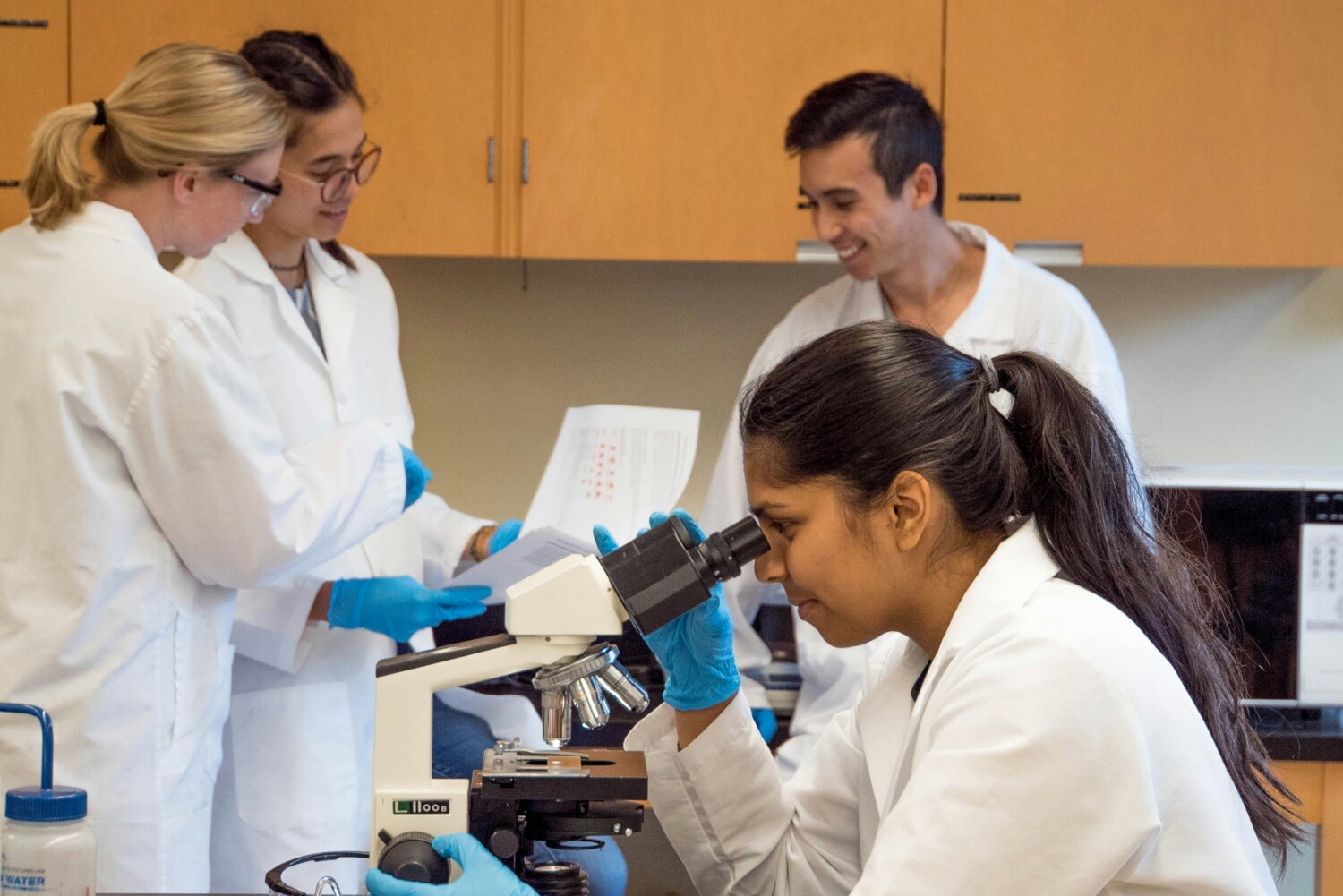
Imagine a room filled with scientists from various disciplines, most of whom are introverts, some on the spectrum, gathered for a Science Communication workshop. A few know each other, but most are strangers. The room is quiet as these participants sip their coffee and wait patiently for the workshop to start.

Cut to an hour later, and the room has become so filled with animated conversation that we have to work hard to get the group settled for the next exercise.

What happened?

These scientists shared an experience where they laughed, played together, and shared vulnerabilities, all aimed at improving their communication skills. This SiCom workshop helped them realize they are not alone; everyone has communication issues and struggles with how best to share their research, proposals, and ideas. But this workshop gave them more than that: it helped them build community.

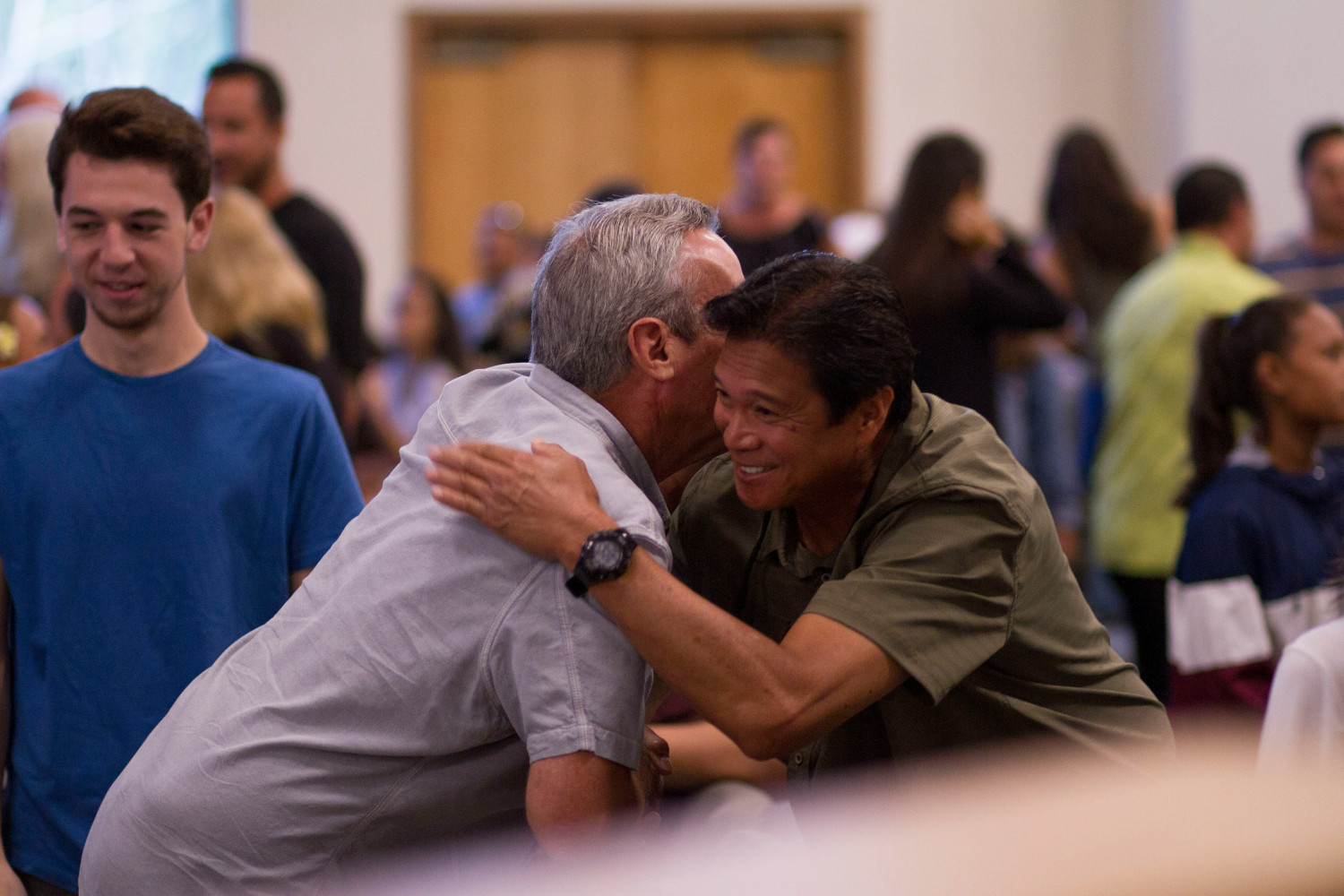
Genuine communication builds community. The problem is that much of our communication isn’t authentic, not because of bad intentions, but because we get caught up in our own thoughts and forget to truly listen and seek understanding. The scientists in the workshop spent the morning doing exercises that helped them connect with one another. They discovered each other’s values, which built trust. They felt seen and heard, making their conversations more meaningful. They found that their science became more interesting and their presentations more impactful when they connected with one another.

Our minds and bodies are designed to facilitate connection. From eye contact and open, friendly body language like smiling, to catching another’s emotions through the mirror neurons in our brains, we are inherently connecting machines. With all this available, we can learn how to make our conversations and presentations more meaningful to our audiences. Every time we speak, we have the opportunity to build community through connection and communication.

 You don’t need to be a scientist to do this. You just have to be a human being, which is safe to say you are. Next time you greet your bus driver with eye contact and genuine friendliness, or the grocery store clerk, or your neighbor, know you’re helping build community and fostering understanding through kind communication.
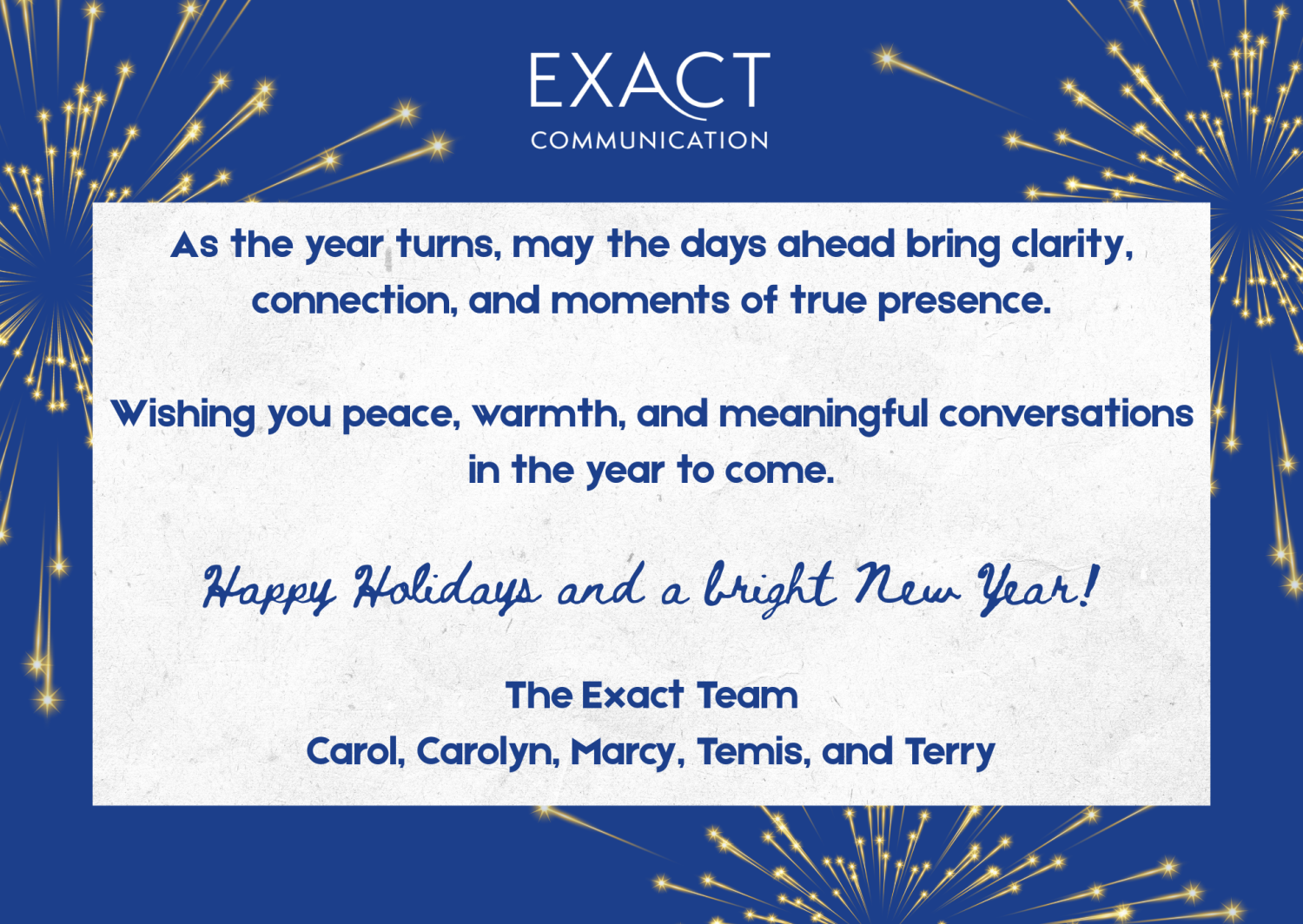

Happy Holidays

May your holiday season bring you and your family much joy.

May the New Year offer opportunities for honest conversation, patient listening, and compassion for one another.

May your words build understanding and your hearts remain open.

May your connections strengthen and uplift your lives.

And may love guide all that you share

Photo-Bombed by Santa

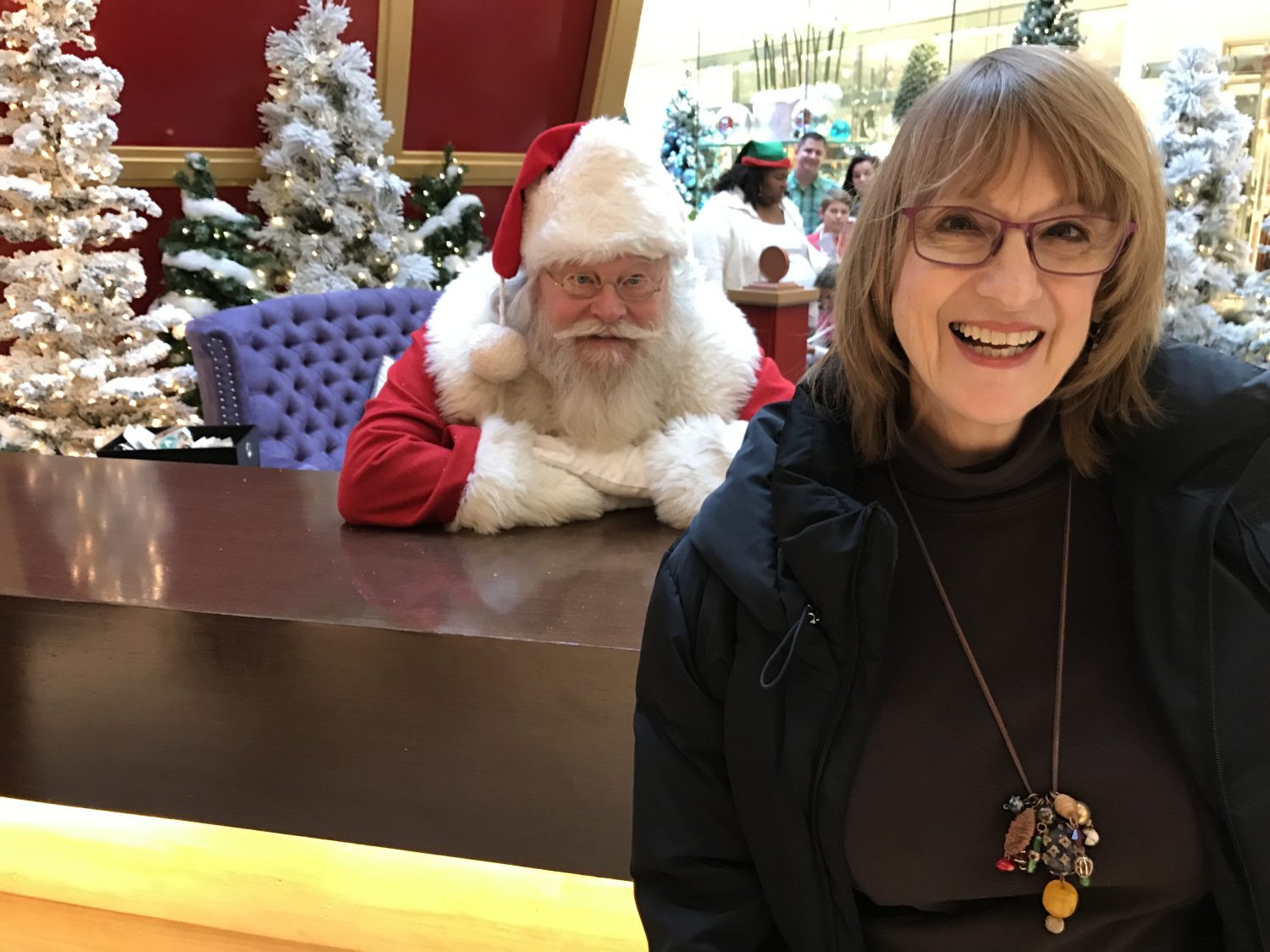
The year is 2016. I am at the Short Hills Mall in New Jersey, walking with my husband. He is recovering from a triple bypass, and the doctor wants him to walk; however, it’s too cold to walk outside. They don’t want him out in anything below 35 degrees, and today it’s in the single digits.

As we walked past Santa’s workshop, David suggested it would be a great background for a photo, and he took one. It wasn’t until later that we saw Santa had photo-bombed me. You can even see him planning to do so in the first photo. There’s that look in his eye as the idea comes to him. Cheeky bastard, that Santa.  

Still, it remains one of my favorite photos. David had come through his surgery with flying colors. It was the Christmas season, and Santa surprised me.

It is those moments, those spontaneous moments, that I think about. Those moments when we decide to do something generous, fun, loving, even sassy, that surprise and delight other people. My guess is that we think of doing these things in the moment but rarely follow through, either out of fear of rejection or because we can’t be bothered to make the effort.

As an improviser, I have learned to trust those moments. I know it is in these spontaneous flashes, call it insight, that magic happens on stage. You can’t plan for this. These moments arise spontaneously, and you must be present to recognize and follow through on them.

 I think we could all use a little more magic in our lives. That magic happens in moments of connection, those openhearted times when we know our bond runs deep, when we recognize our shared humanity, the beauty in the uniqueness of another person, and the goodness in letting your heart act selflessly and generously.

The second rule of Improv is, “Make Your Partner Look Good.” How can you make everyone you meet today look good? What might delight someone? A smile? A compliment? A spontaneous chat on the subway, at the supermarket, or in the dog park? Maybe you tip your barista generously and unexpectedly. Perhaps you thank a cop or a bus driver. Or maybe you’re inspired to buy someone flowers or write a note of love and appreciation.

Here’s the deal: follow your spontaneous and generous urge. These urges will arise, trust me. Then, after following through, spend a little time pondering where that urge came from. Your answer may surprise and delight you.

Happy Holidays.

Thanksgiving – Gratitude, Turkey, and…Unity? by Carol Schindler

It will soon be Thanksgiving, when we gather with family and friends to eat, drink, and probably watch more than a little football. We think of it as a day of rest and the opportunity to indulge in mom’s buttery, herb stuffing and, of course, warm apple or pumpkin pie, loaded with a generous portion of fresh whipped cream. We complain about the calories, but that doesn’t stop us from having seconds.

In 1863, Abraham Lincoln declared Thanksgiving a national holiday. It was partly inspired by Sarah Josepha Hale, who wrote letters and editorials to the government for 36 years, advocating for a holiday that promoted unity across the nation. There is no doubt that Lincoln knew the time was right for such a holiday, with the Civil War in its third year and no sign of peace and unity.

The proclamation itself addressed the nation’s civil strife. It acknowledged the suffering and loss of many, the need for healing, and the end of the war. It also called for gratitude for the shared blessings of our country, “the blessings of fruitful fields and healthful skies”.

While we often picture the Pilgrims and Indigenous people sharing a harvest meal, the Thanksgiving we know today owes much to a different chapter of history.

I had no idea that Thanksgiving Day promotes national unity, the end of suffering, and gratitude for this country. This gives Thanksgiving a whole new flavor (pun intended). In some ways, Lincoln’s call for unity in a time of national division still feels as relevant now as it did then.

As a communication coach, I dedicate my time to helping people connect and communicate more effectively through deep listening and compassionate speech. When we communicate this way, unity isn’t an issue because it comes from genuine interaction, even when agreement isn’t achieved. When we aim to understand each other, we realize that diversity and unity can coexist. The question is, are we willing to become a bit more vulnerable and listen when we’d rather just pass the mashed potatoes? Your call.

Why Exact Communication Training Matters for the Next Generation of Scientists and Clinician

In the first years of a medical residency, or the early stages of an engineering or research career, young professionals are often focused on mastering technical skills: diagnosing, calculating, experimenting, or modeling. Yet, one of the most critical abilities that determines their long-term impact isn’t technical at all — it’s communication.

Learning to communicate complex or sensitive information with clarity, care, and empathy is an essential professional skill. It is what turns knowledge into understanding, data into trust, and expertise into collaboration.

Imagine the difference in relationships between doctors and patients — or between urban engineers and local communities — if communication were treated not as a transfer of information, but as an act of connection. Instead of delivering statistics, facts, and directives, what if early-career professionals learned to approach every conversation with the goal of shared understanding?

In healthcare, this could mean fewer misunderstandings and more patient trust. In engineering, it could mean communities that feel heard and respected in decisions that shape their neighborhoods. Across disciplines, it means decisions that are better informed, more humane, and ultimately more effective.

Exact Communication training is vital for young professionals at the threshold of highly technical fields—medicine, psychiatry, engineering, science—where communication is not optional, but foundational. These are the people responsible for sharing critical information with large and diverse populations, often including those in vulnerable positions who may not have the background to understand specialized language.

Teaching these future leaders how to translate complexity into clarity—without losing empathy—creates a culture of understanding rather than misinterpretation.

As Professor Matteo Rini of NYU Tandon put it after an Exact Communication workshop:

“The workshop by Exact Communication taught the students the most important skill needed to be a good communicator: empathy for your audience. Every student in STEM should take a workshop like this one!”

Empathy is not a “soft skill.” It’s the skill that allows every other one to matter.

To learn more about how Exact Communication can help your student or early career professionals, visit our website: Exact Communication

When communication becomes a bridge instead of a barrier, professionals don’t just convey expertise—they create trust, collaboration, and change. Investing in communication training early in a career is an investment not only in personal success, but in the integrity and impact of entire professions.

Finding Your Voice By Carolyn Hall

In this season of graduations, commencements, and people of all ages heading off to their next steps in life, I think about the motivational speeches these new graduates and their families and friends are hearing to send them on their way.

My wonderful niece just graduated from college, and over the weekend, with her, I heard many good speakers. But those that resonated with me, the speeches that surpassed the “nice, well done” to stop time and suddenly capture all my attention and emotions, are those I can’t forget.

They were the ones who noted this tumultuous time, didn’t sugarcoat the challenges already faced and the ones that lie ahead, yet gave … something else.

Something else for the future that felt like a bit of hope, a boost of confidence, a recognition of the accomplishments and the resiliency each graduate carries.

These unforgettable speakers also had the comfort and ease of speaking in their own voice. Some were quiet, held pauses, were humorously self-deprecating, and full of respect. Others were enthusiastic, calling us to action, celebratory, and relishing the triumph of what had been achieved. They each had their unique way.

The individual tone wasn’t what made them captivating.

It was that each was heartfelt, sincere, seeded with personal anecdotes, cultural references, and vulnerabilities that made them human, humble, and relatable.

And, honestly, the great ones were relatively short!

After clapping, laughing, and wiping away tears, I kept coming back to those elements that made the best speeches resonate. They are what we talk about in every communication class we teach. A talk can be filled with beautiful words and well-crafted thoughts, but once you find YOUR voice, reveal your stories and your humanity, that’s when your message sings.

So, I can’t sign off without sharing some of the messages that are still with me.

Share them with a graduate in your life, or enjoy them for the pearls of wisdom they are:

  • It is possible, even normal and healthy, especially at eventful times, to hold two opposing feelings (joy and sorrow, exhaustion and exhilaration) at the same time. To be able to do so and still be in the moment with others is a sign of an agile mind and a resilient spirit.
  • Some Winnie the Pooh wisdom: to get where you are going, you must walk away from where you’ve been.
  • And: Get out into the world and have conversations. Conversations are the key to creating relationships and forming community. You never know when what you learn about a person in a seemingly unimportant chat can perhaps save their life, or yours.

Congratulations to all the 2025 graduates!

You and Your Advisor – A Relationship that Matters

Graduate school is tough enough. Classes, papers, research. Sometimes you feel like you’re hanging on by your fingernails. The last thing you need is a complicated relationship with your advisor.

For a grad student, one of your most important relationships is with your faculty advisor. This relationship shapes a student’s career while in school and is often key to the student’s future success. Suppose a student has a supportive and positive relationship with their advisor and is truly mentored by them. In that case, the student gains confidence, experiences effective leadership, and gains an ally for their professional future. That’s the way it should work.

However, the student-advisor relationship is often marred by poor communication and misunderstood expectations. It’s not good, but it is understandable. The students and the professors who serve as advisors have lots on their plates. And let’s be honest. There is a power dynamic between a student and mentor that can be pretty daunting. Overcoming or working within that dynamic can make a huge difference in building a mutually beneficial, productive, and professional relationship. Grad students need the guidance and experience their mentors provide, and advisors take pride in their students’ successes and academic achievements.

Communication is key! Wherever your relationship stands, you can level the power dynamic with some strategies that are easy to learn and, with practice, can become part of your “communication toolbox.”

We are thrilled to work with the stellar graduate students at New York University’s Tandon School of Engineering to help them learn new approaches to building a successful relationship with their advisors. Through Exact’s mix of improvisation exercises and facilitated discussions, we’ve developed some strategies the students have found especially useful. These include:

  • Approach the relationship as a collaboration: you both benefit when the relationship works, and you both need the other to achieve goals.
  • Clarify the goal for each interaction with your advisor and present your needs clearly
  • Understand and address your mentor’s needs and priorities
  • Make sure your mentor knows that they have been heard
  • Find confidence in what you know

Try these approaches yourself by setting up a practice session with a friend. See how quickly you can change a daunting relationship into a productive academic partnership.

And contact us at Exact if you’d like to know more about including our Navigating Your Relationship with your Faculty Advisor workshop in your academic program. We’d love to hear from you.

Somewhere Between Happy and a Total #@%! Wreck!

I’m getting used to talking myself down. This is the pattern my life is following during these tumultuous times. I’m an optimist by nature and usually maintain a positive outlook on life, the people in it, and the circumstances I face. However, lately, even if I start the day bright and cheery, all I have to do is pick up my phone, read the headlines, and my cheerful optimism takes a nosedive.

I experience more emotional swings than a kindergartner on a rainy day, and like that kindergartner, I want out. I want all the chaos to end, and I want to go outside and play. Well, not exactly play, but I want to remember what it was like to hear the news without thinking Armageddon. I want to chat with family, friends, and neighbors without concern that I may accidentally venture into Thou Shalt Not Mention areas. Can one be happy in this environment?

Yes, I believe one can. But it takes some self-awareness and action. Self-awareness means that I must become aware when slipping from my calm self into my chaotic self. When I catch myself feeling anger, fear, or anxiety, I pause, breathe, and identify where in my body I feel the emotion. This conscious awareness and breath calm me down. The negative emotions dissipate when I sense where they reside in my body and breathe into them. This gives me enough awareness and attention to be more objective, and I feel better afterward.

This addresses my emotional reactions; however, the situation that caused them remains. But I am not powerless. I can become active. I can do something. I have discovered that doing something, unlike nothing, makes me feel better. So, I make calls, go to rallies, write postcards, talk to like-minded people, and occasionally put on some Motown and dance in my living room.  And you know what it feels like?

Recess.

That beautiful space between happy and a #@% wreck.

What Language Are You Speaking?

A Presidential Action has just made English the “official language” of the United States. Here is a snippet from the proclamation:

“To promote unity, cultivate a shared American culture for all citizens, ensure consistency in government operations, and create a pathway to civic engagement, it is in America’s best interest for the Federal Government to designate one — and only one — official language.  Establishing English as the official language will not only streamline communication but also reinforce shared national values and create a more cohesive and efficient society.”

Regardless of how you feel about this new proclamation, it’s evident that even those of us who speak English aren’t speaking the same language. We aren’t communicating effectively. We aren’t coming from the same place. We don’t see eye to eye. There is a significant divide, and insisting that we all use the same language will not foster a “more cohesive and efficient society.” Only connection and communication can achieve that. And that is a choice we each make: are we willing to put in the effort—it’s a hefty one—to communicate with one another?

This is personal for me. Members of my English-speaking family communicate in a language I do not recognize. They might as well be speaking Chinese, Hindi, or Zulu. They have a completely different perspective on what is happening that I cannot understand. It is so different that I wonder if we truly share the same DNA. We do not share the same values. I believe we used to, but now we do not, and this has left me feeling not only confused but also hurt. This is happening all over the country. Even though we are speaking English, we are not speaking the same language; we are not a cohesive and efficient society. How could we be with this level of misunderstanding?

I recognize what I need to do. I teach connection and communication. I understand how to listen, ask questions, and engage in dialogue. The real question is: Am I willing to do this? Am I willing to invest the time? Am I willing to move closer instead of further away? Can I communicate with those who are unwilling to listen? I don’t think so. But what if they are willing? What if we can engage in dialogue? This does not mean that we have to come to any kind of agreement. It means we seek to understand each other. Honestly, I haven’t made the effort, and my attempts haven’t been grounded in sincerity and patience. I have already assumed that they are wrong, and I am right. That leaves us at an impasse with no way forward. This doesn’t feel good; it feels awful.

So, I am choosing to try, at least with those I care about. I will seek understanding. I will listen. I will engage in dialogue. I will search for shared values; there must be some. I will not try to change their minds, but I will listen for ways to connect, and this will only happen if I refuse to back away. It will only occur if I move closer. I hope I have the courage to do so.

The Importance of Community… and Dogs

Two years ago, almost to the day, my husband and I relocated from New Jersey to Colorado. The idea of starting fresh in a new community felt overwhelming. How would we make new friends? How would we navigate the intricacies of life in a different state? How would we locate the nearest COSTCO?

We had left friends and family back on the East Coast and missed them. We had no one to call when we needed help with our new home. David is a musician, and now he has no one to jam with. I have left my yoga ladies, meditation group, and, oh yeah, my Exact team, most of whom live in New York City. We didn’t even know the best places to call for takeout.  We were hungry in more ways than one; we were hungry for community.

The truth is, we all hunger for community. I didn’t realize this until it was missing when I lacked someone to call, a friend to hang out with, and a sense of belonging in my new city. Community provides us with opportunities, inspiration, and resources. I quickly understood that we needed more than just our spectacular view of the mountains; we needed people.

Fortunately, we have a dog that needs walking. We also live near Boulder, possibly the most dog-friendly city in the country. Before long, we began meeting people at the dog park—individuals who made us feel comfortable in our new community by offering information, advice, and directions to the nearest Costco. Soon, we started forming friendships. David met musicians, while I discovered a Tai Chi class. We both developed new relationships. We began to feel a sense of belonging and well-being. We were going to be okay.

Don’t underestimate the importance of community. We cannot thrive without it. We cannot heal without it. We cannot make sense of life without it. Yes, it’s that significant. Just sayin’.


Dog park friends.

Recent Posts

Archives